· 1 min read
Why website speed matters more than your design
Slow websites lose visitors before the design is even seen. What website speed really affects, how fast is fast enough, and what actually makes pages slow.
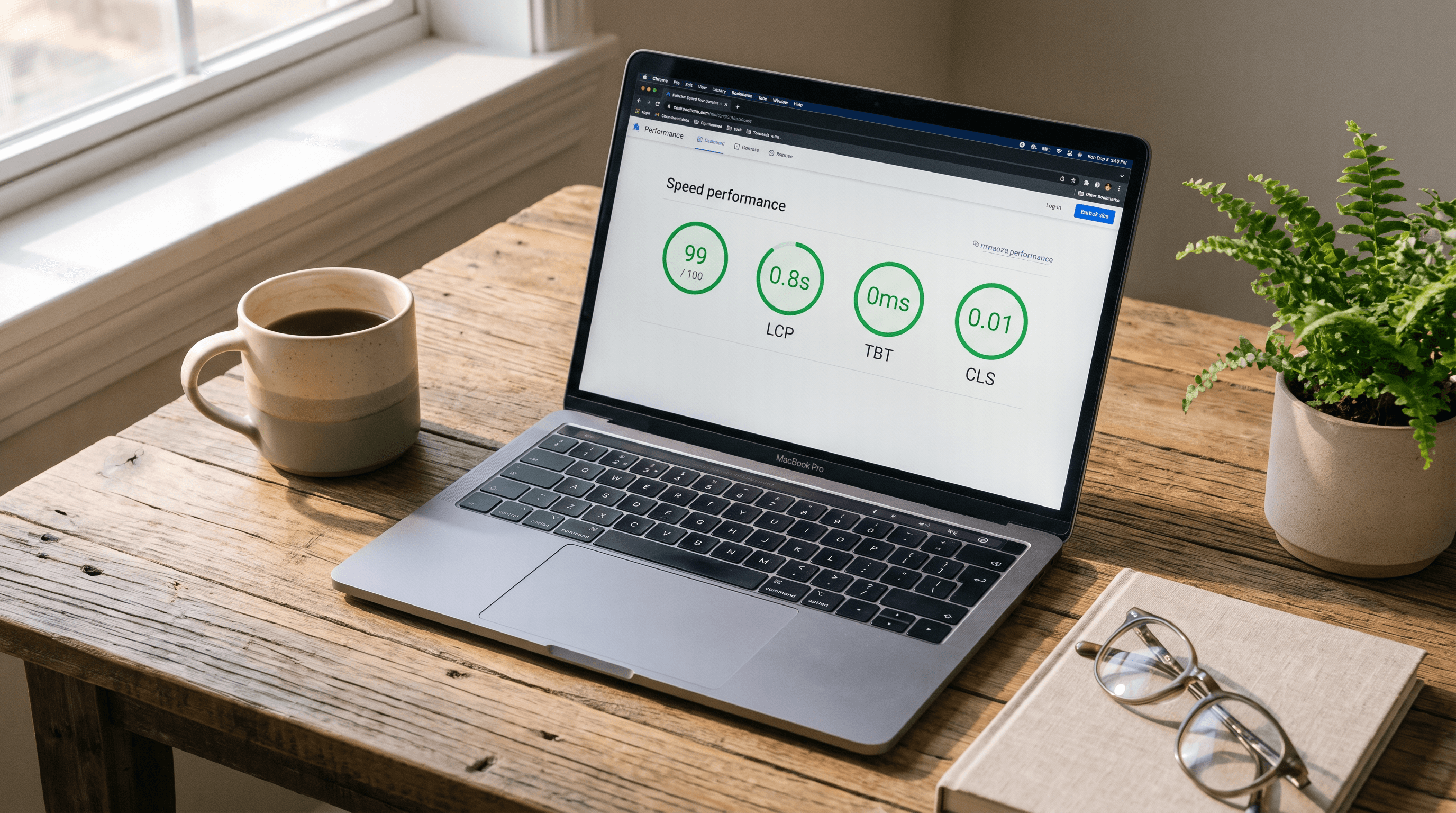
A beautiful website that loads slowly is a beautiful website almost nobody sees. Most visitors decide whether to stay within a few seconds, and search engines treat loading speed as a ranking signal. Before debating colors and layouts, speed is the first thing worth getting right.
What does website speed actually affect?
- Bounce rate: visitors leave slow pages before reading anything.
- Search rankings: Google uses Core Web Vitals as a ranking signal.
- Conversions: every extra second of loading measurably reduces sales and inquiries.
- Ad costs: faster landing pages score better and lower your cost per click.
How fast is fast enough?
A useful target: your main content should be visible in under 2.5 seconds on an average phone connection. That is the threshold Google uses for its Largest Contentful Paint metric. You can test any page for free with PageSpeed Insights; scores in the green mean you are in good shape.
What makes websites slow?
In our experience the usual suspects are oversized images, too many third-party scripts, cheap hosting, and heavy page builders. The fix is rarely one magic setting: it is building on modern foundations that treat speed as a requirement, not an afterthought. That is how Rawafid builds every site: images optimized automatically, pages pre-rendered, and scripts kept to a minimum.
Speed is not a technical detail. It is the first impression your business makes.
Where to start if your site is slow
Run your homepage through PageSpeed Insights and look at the biggest items in the report. If the fixes look structural, a rebuild on modern foundations is often cheaper than patching an old setup. If you want a second opinion, tell us about your site and we will audit it before recommending anything.
Common questions
How do I check my website speed?
Use Google's free PageSpeed Insights tool. Enter your URL and it scores your site on mobile and desktop, and lists what slows it down.
What is a good loading time for a website?
Main content visible in under 2.5 seconds on a phone. That matches Google's Largest Contentful Paint threshold for a good experience.
Does website speed really affect SEO?
Yes. Core Web Vitals are a confirmed Google ranking signal, and slow pages also rank worse indirectly because visitors leave them faster.
Can an existing slow website be fixed without a rebuild?
Sometimes. Oversized images and extra scripts can be fixed in place. If the platform itself is heavy, a rebuild on faster foundations usually costs less than fighting it.

